
Proven Kitchen Interior Design Ideas For Better Living
Your kitchen is the heart of your home, and the right interior design ideas for kitchen spaces can completely change how you cook, entertain, and live. This guide is perfect for homeowners planning a renovation, renters looking to refresh their space on a budget, and anyone who wants their kitchen to look amazing and work better.
We’ll walk you through proven color schemes that instantly transform your kitchen space, from bold accent walls to timeless neutral palettes. You’ll also discover layout optimization strategies that maximize every square foot, making even small kitchens feel spacious and efficient. Plus, we’ll cover smart lighting solutions that create the perfect atmosphere for everything from morning coffee to dinner parties.
Get ready to turn your kitchen into a space you absolutely love spending time in.
Color Schemes That Transform Your Kitchen Space
Bold accent colors for modern appeal
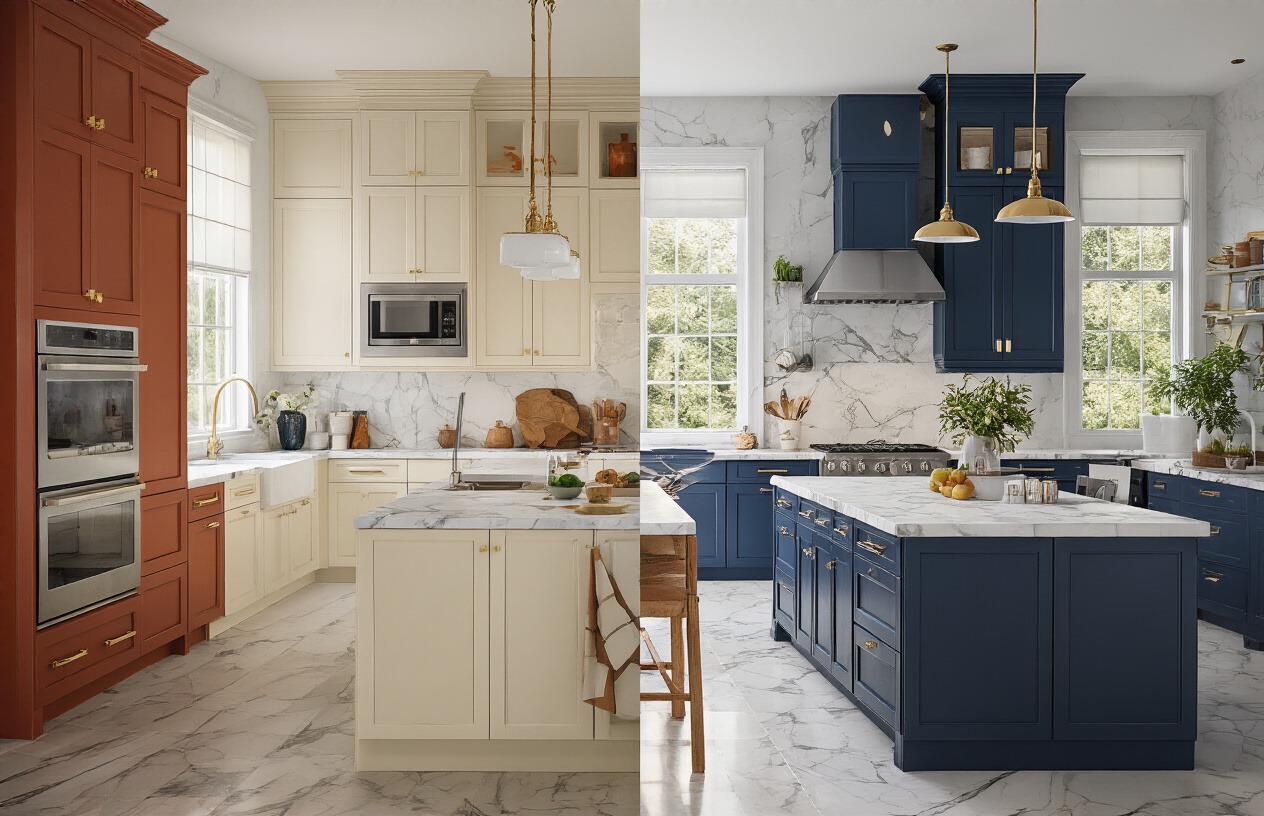
Injecting bold accent colors into your kitchen interior design ideas creates instant drama and personality. Deep navy blues paired with brass fixtures deliver sophisticated contrast, while emerald green cabinets against white marble countertops make a stunning focal point. Consider painting a single accent wall in charcoal gray or rich burgundy to anchor your modern kitchen design without overwhelming the space.
Vibrant colors work best when balanced with neutral elements. A bright coral island can energize the entire room when surrounded by crisp white cabinetry. Similarly, bold yellow bar stools or pendant lights add cheerful pops without requiring major renovations. These accent pieces let you experiment with trends while maintaining flexibility for future updates.
For maximum impact, choose one dominant accent color and repeat it throughout the space in smaller doses. This creates visual cohesion while preventing the design from feeling chaotic or overwhelming.
Neutral palettes for timeless elegance
Kitchen color schemes built on neutral foundations never go out of style. Warm whites, soft grays, and creamy beiges create serene environments that showcase beautiful textures and materials. These colors make spaces feel larger and brighter while providing the perfect backdrop for both contemporary kitchen interiors and traditional designs.
Layering different shades of the same neutral family adds depth without introducing visual chaos. Combine pearl white cabinets with dove gray walls and limestone countertops for sophisticated monochromatic appeal. Warm beiges and taupe tones create cozy, inviting atmospheres that work beautifully in both large and small kitchen design ideas.
The beauty of neutral palettes lies in their versatility. You can easily refresh the look by changing hardware, adding colorful accessories, or updating lighting fixtures without major renovations.
Two-tone combinations for visual interest
Two-tone kitchen cabinet ideas have become increasingly popular for creating dynamic, layered looks. Dark lower cabinets paired with light upper cabinets draw the eye upward while providing practical benefits – darker colors hide wear and stains better at floor level.
Classic combinations include navy and white, sage green with cream, or charcoal with natural wood tones. For a more adventurous approach, try pairing complementary colors like soft blue with warm gray or dusty pink with sage green.
Consider extending the two-tone concept beyond cabinets to walls, islands, and trim work. A white kitchen with a contrasting dark island creates natural zoning while adding visual weight to anchor the space. This approach works exceptionally well in open-concept homes where the kitchen flows into adjacent living areas.
Layout Optimization for Maximum Functionality
Strategic work triangle positioning
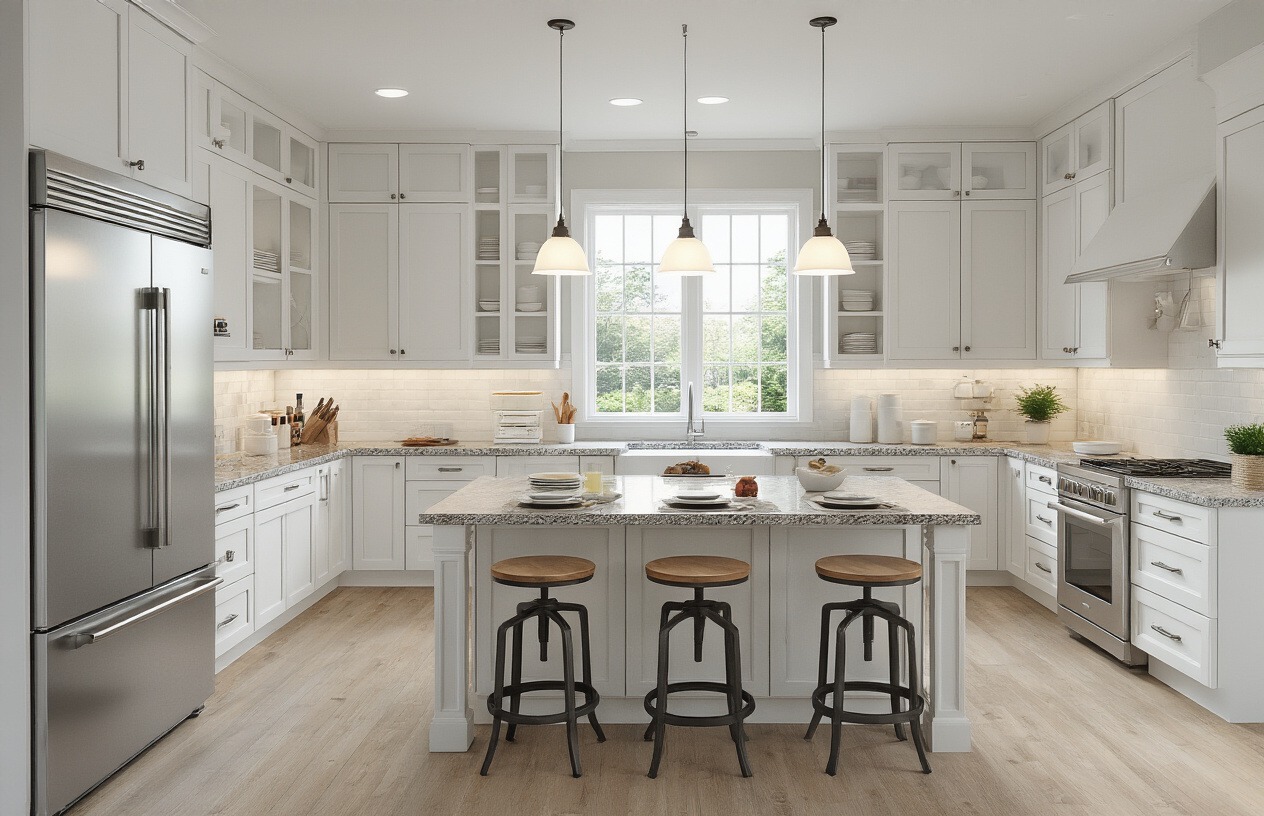
The work triangle remains one of the most important principles in kitchen layout optimization. This concept connects your sink, stove, and refrigerator in an imaginary triangle, creating an efficient workflow that saves you countless steps during meal preparation. The ideal distance between each point should range from 4 to 9 feet, with the total perimeter staying under 26 feet.
Position your sink as the primary hub since it’s used most frequently for food prep and cleanup. Place it near a window when possible for natural light and views. Your refrigerator should be easily accessible from the entrance, allowing family members to grab snacks without disrupting cooking activities. The stove needs adequate counter space on both sides and proper ventilation above.
Avoid placing obstacles like islands or peninsulas directly in the triangle path. Keep the workspace clear of foot traffic from other family members moving through the kitchen. This modern kitchen design approach ensures smooth movement between the three most critical work zones.
Smart storage solutions for small spaces
Small kitchen design ideas focus heavily on maximizing every inch of available space. Vertical storage becomes your best friend – install cabinets that reach the ceiling and use the upper shelves for items you don’t need daily. Pull-out drawers in lower cabinets make accessing items much easier than traditional shelving.
Consider these space-saving solutions:
- Corner lazy Susans to utilize awkward corner spaces
- Drawer organizers for utensils and small items
- Magnetic strips on walls for knives and spice jars
- Under-cabinet hooks for mugs and cooking tools
- Pantry pull-outs that slide completely out for easy access
- Toe-kick drawers beneath base cabinets for storing baking sheets
Wall-mounted storage keeps counters clear while adding functionality. Install rails with hanging baskets, or mount small shelves for frequently used spices and oils. These kitchen renovation tips help create the illusion of more space while improving organization.
Open concept designs for better flow
Open concept kitchens create seamless transitions between cooking, dining, and living areas. This layout removes walls between spaces, making your home feel larger and more connected. Families can interact naturally while someone prepares meals, and entertaining becomes more inclusive.
Plan sight lines carefully when designing open layouts. Your kitchen should feel integrated but not expose every mess to guests in the living room. Use different flooring materials or ceiling treatments to define separate zones without physical barriers.
Consider noise levels in open designs. Choose quieter appliances and add soft furnishings in adjacent areas to absorb sound. Proper ventilation becomes even more critical since cooking odors can travel throughout the connected spaces.
Island placement for added workspace
Kitchen islands serve multiple purposes beyond extra counter space. They provide additional storage, seating options, and can house appliances like dishwashers or wine coolers. The key lies in proper placement and sizing for your specific layout.
Allow at least 36 inches of clearance around all sides of your island for comfortable movement. If multiple people cook together, increase this to 42-48 inches. The island should complement your work triangle, not disrupt it.
| Island Size | Kitchen Minimum Size | Best Uses |
|---|---|---|
| 4′ x 2′ | 12′ x 12′ | Storage, prep space |
| 6′ x 3′ | 14′ x 14′ | Storage, seating for 2 |
| 8′ x 4′ | 16′ x 16′ | Full workspace, seating for 4 |
Mobile islands work well in smaller spaces where permanent installations might feel cramped. These contemporary kitchen interiors offer flexibility to move the workspace when needed or roll it away for gatherings.
Lighting Solutions to Enhance Your Kitchen Atmosphere
Task Lighting for Cooking and Preparation Areas
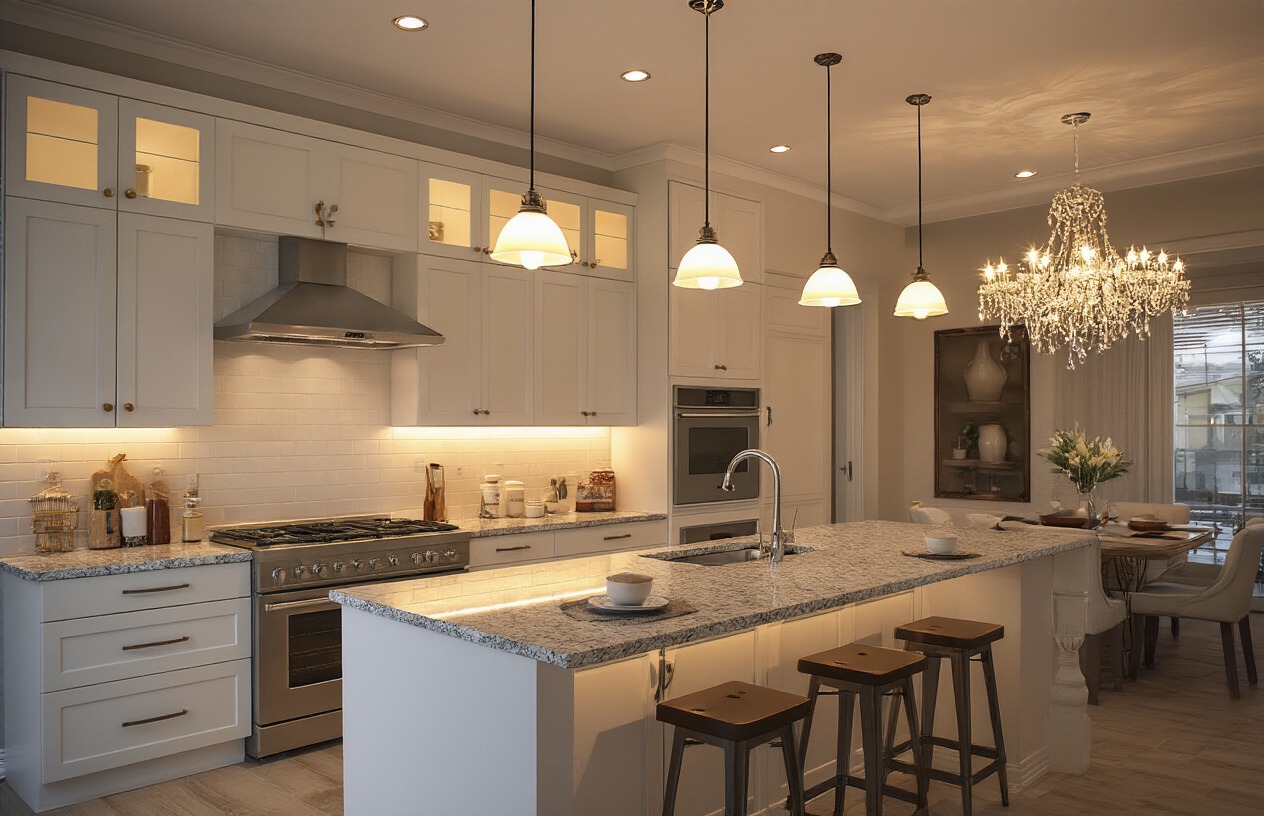
The backbone of effective kitchen lighting design starts with proper task lighting that illuminates your workspace. Under-cabinet LED strips create the perfect solution for countertop prep areas, eliminating shadows cast by overhead fixtures. These sleek lights mount easily beneath wall cabinets and provide focused illumination exactly where you need it most.
Pendant lights suspended over kitchen islands or peninsulas serve dual purposes – they deliver concentrated light for chopping, mixing, and plating while adding visual interest to your space. Choose fixtures that hang 30-36 inches above the surface to prevent glare and head bumps. Track lighting offers flexibility, allowing you to direct light beams precisely where cooking activities happen most.
Recessed ceiling lights positioned strategically above the stove, sink, and primary prep zones ensure you can see what you’re doing clearly. Install dimmer switches to adjust brightness levels based on the complexity of your culinary tasks.
Ambient Lighting for Comfortable Dining
Creating a warm, inviting atmosphere for meals requires softer ambient lighting that fills the entire kitchen space. Recessed ceiling fixtures on dimmer controls provide excellent general illumination that adapts to different occasions – bright for morning coffee prep, subdued for intimate dinner conversations.
Chandeliers or large pendant fixtures over dining tables become stunning focal points while casting gentle, widespread light. Choose fixtures with multiple bulbs or fabric shades that diffuse harsh glare and create a welcoming environment for family gatherings.
Cove lighting hidden behind crown molding or toe-kick lighting beneath base cabinets adds subtle ambient glow that makes your kitchen feel larger and more open during evening hours.
Accent Lighting to Highlight Design Features
Strategic accent lighting transforms your kitchen from purely functional to genuinely spectacular. Glass-front cabinets benefit from interior LED strips that showcase beautiful dishware, glassware, or decorative items. These lights turn storage into display opportunities that catch guests’ attention.
Backsplash lighting creates dramatic visual impact – LED strips placed behind translucent materials like glass tile or natural stone make surfaces appear to glow. This technique works particularly well with modern kitchen design elements and contemporary kitchen interiors.
Display shelves, artwork, or architectural details like exposed beams deserve their own dedicated lighting. Small spotlights or picture lights draw the eye to these special features, adding layers of visual interest that elevate your overall kitchen interior design ideas.
Consider color-changing LED options that let you adjust the mood for different occasions – cool whites for task-focused cooking sessions, warm tones for relaxed entertaining.
Cabinet Design Choices That Make a Statement
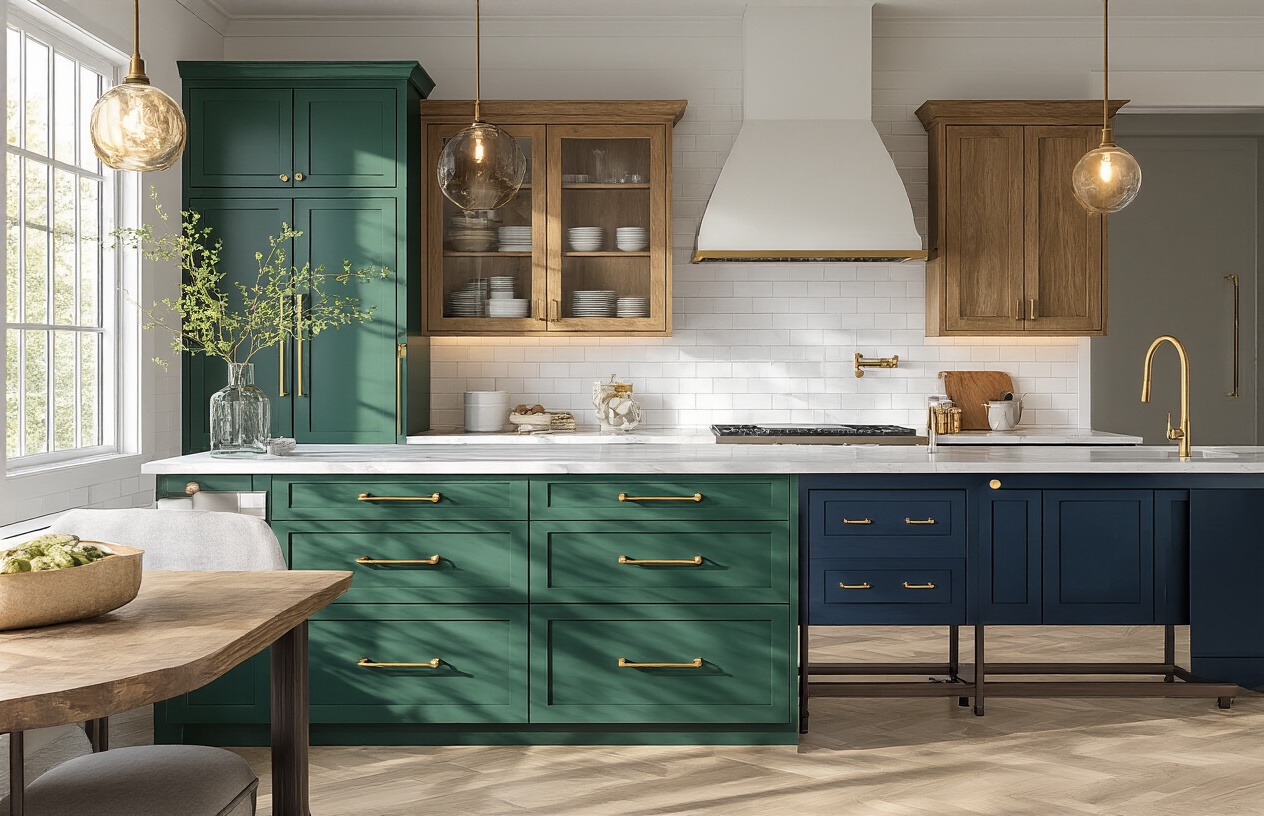
Sleek Handleless Designs for Minimalist Appeal
Handleless cabinets create the ultimate clean-lined aesthetic that modern kitchen design demands. These contemporary kitchen cabinet ideas eliminate visual clutter while maintaining full functionality through push-to-open mechanisms or touch-activated systems. The seamless appearance makes your kitchen feel more spacious and organized, especially valuable in small kitchen design ideas where every visual element matters.
Finger pulls integrated into the cabinet edges offer another sophisticated solution. These subtle recesses maintain the minimalist look while providing easy access to storage. Popular finishes include matte black, warm wood tones, or pristine white that complement various kitchen color schemes.
Glass-Front Cabinets to Display Favorite Items
Glass-front cabinetry transforms storage into a design feature by showcasing your most beautiful dishes, glassware, or collectibles. This kitchen interior design idea works particularly well in upper cabinets where you want to create visual interest without overwhelming the space.
Consider these glass options:
- Clear glass for maximum visibility
- Frosted glass for subtle concealment
- Fluted glass for textural interest
- Seeded glass for vintage charm
Strategic interior lighting enhances the display effect, creating a warm glow that adds ambiance to your kitchen renovation. Mix glass fronts with solid doors to balance openness with hidden storage for everyday items.
Mixed Materials for Texture and Contrast
Combining different cabinet materials creates depth and personality in your kitchen design. Popular combinations include:
| Base Material | Accent Material | Visual Effect |
|---|---|---|
| Wood | Metal | Warm meets industrial |
| Painted MDF | Natural wood | Classic with organic touch |
| Laminate | Stone veneer | Budget-friendly luxury |
| Thermofoil | Reclaimed wood | Modern meets rustic |
The key is maintaining balance – use one material as your primary choice and introduce the second as an accent on islands, upper cabinets, or pantry doors. This approach prevents the design from feeling chaotic while adding visual interest.
Custom Heights for Improved Accessibility
Standard cabinet heights don’t work for everyone. Custom sizing ensures your kitchen functions perfectly for your household’s needs. Taller individuals benefit from raised upper cabinets and higher counters, while shorter users appreciate lowered wall cabinets for easier access.
Kitchen layout optimization includes considering who uses the space most frequently. Installing cabinets at varying heights can accommodate multiple users while creating an interesting stepped visual effect. Pull-down shelving systems in upper cabinets bridge accessibility gaps, bringing stored items within easy reach regardless of height.
Countertop Materials That Combine Beauty and Durability
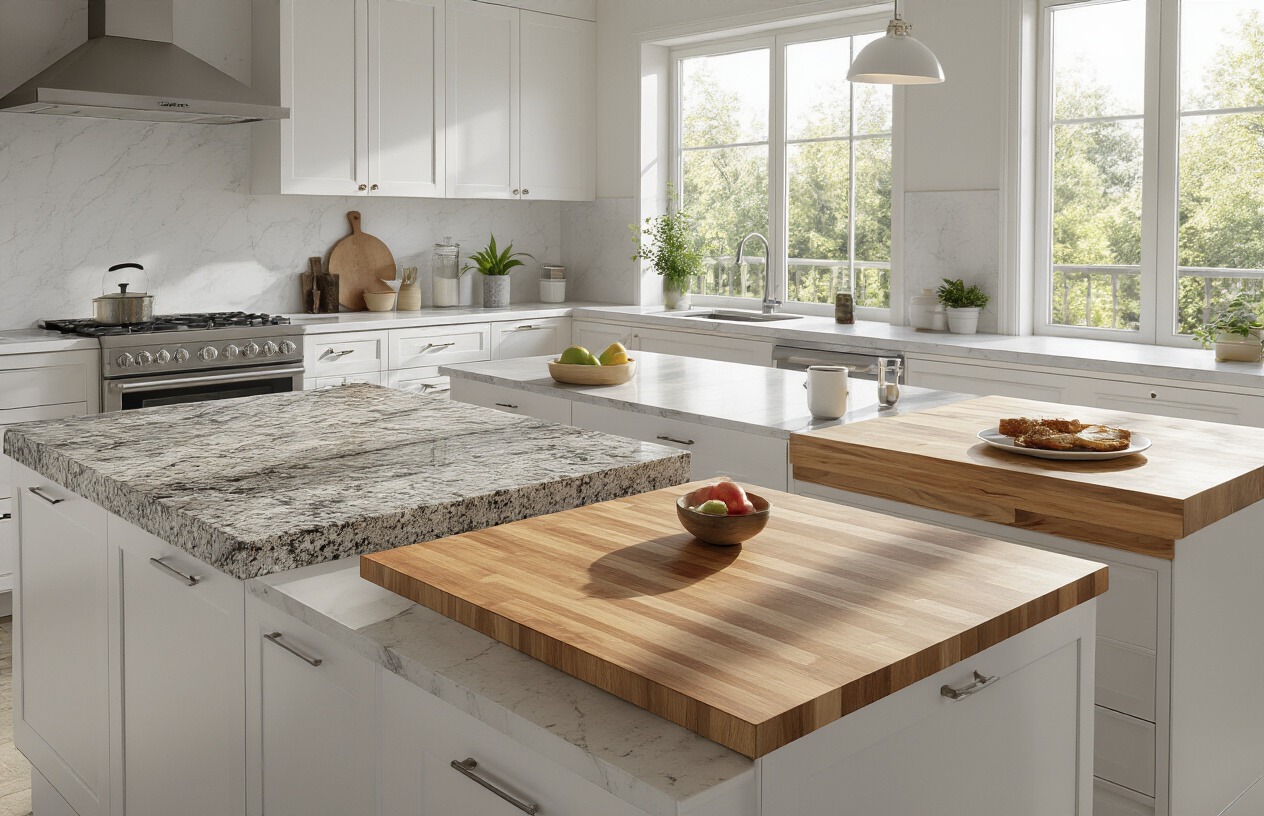
Quartz Surfaces for Low-Maintenance Luxury
Quartz countertops have become the gold standard for kitchen countertop materials, and it’s easy to see why. These engineered surfaces combine crushed natural quartz with polymer resins, creating a non-porous material that resists stains, scratches, and bacteria without requiring any sealing. Popular brands like Caesarstone and Silestone offer hundreds of colors and patterns, from classic marble looks to bold contemporary designs that can anchor any modern kitchen design.
The beauty of quartz lies in its consistency. Unlike natural stone, you won’t find unexpected veining or color variations that might clash with your kitchen interior design ideas. Maintenance is practically effortless – just soap and water for daily cleaning, with no need for special treatments or periodic resealing. While the upfront cost is higher than some alternatives, the long-term value makes quartz an excellent investment for kitchen renovation projects.
Natural Stone for Authentic Character
Nothing quite matches the timeless appeal of natural stone countertops. Granite remains a favorite choice, offering incredible durability and heat resistance that can handle hot pans straight from the stove. Each slab tells its own geological story through unique patterns and color variations that you simply can’t replicate artificially.
Marble brings unparalleled elegance to kitchen spaces, with its distinctive veining creating stunning focal points. Carrara, Calacatta, and Statuario marbles each offer different aesthetics – from subtle gray veining to bold, dramatic patterns. Keep in mind that marble requires more care than other kitchen countertop materials, as it’s susceptible to etching from acidic substances like lemon juice or vinegar.
Soapstone presents another compelling option, featuring a naturally smooth surface that develops a beautiful patina over time. This material was popular in old farmhouses and is making a comeback in contemporary kitchen interiors for its authentic, lived-in character.
Butcher Block for Warm, Organic Feel
Wood countertops inject warmth and natural beauty into kitchen spaces in ways that stone and engineered materials simply cannot match. Popular choices include hard maple, walnut, cherry, and bamboo, each offering distinct grain patterns and color tones that complement various kitchen color schemes.
Butcher block countertops require regular maintenance, including monthly oiling to prevent drying and cracking. However, this hands-on care creates a personal connection with your kitchen space. Minor scratches and dents can actually add character over time, or they can be easily sanded out during periodic refinishing.
The versatility of wood allows it to work beautifully in both rustic farmhouse kitchens and sleek modern designs. Pairing butcher block with white cabinets creates a classic contrast, while darker woods complement contemporary kitchen cabinet ideas with bold colors or minimalist designs.
Concrete Options for Industrial Chic Style
Concrete countertops offer unlimited customization possibilities for homeowners seeking truly unique kitchen interior design ideas. This material can be shaped, colored, and textured to match virtually any design vision, from smooth, minimalist surfaces to rustic, hand-troweled finishes with visible aggregate.
Modern concrete mixes incorporate additives that improve durability and reduce the likelihood of cracking. Integral colors can create subtle earth tones or bold statement hues, while acid staining produces dramatic, variegated effects that rival natural stone. Embedded materials like glass chips, metal shavings, or decorative stones can add visual interest and personal flair.
The industrial aesthetic of concrete works particularly well in loft-style kitchens or contemporary spaces with exposed brick or steel elements. While concrete requires periodic sealing and careful maintenance to prevent stains, the ability to repair small chips or scratches makes it a practical long-term choice for adventurous homeowners.
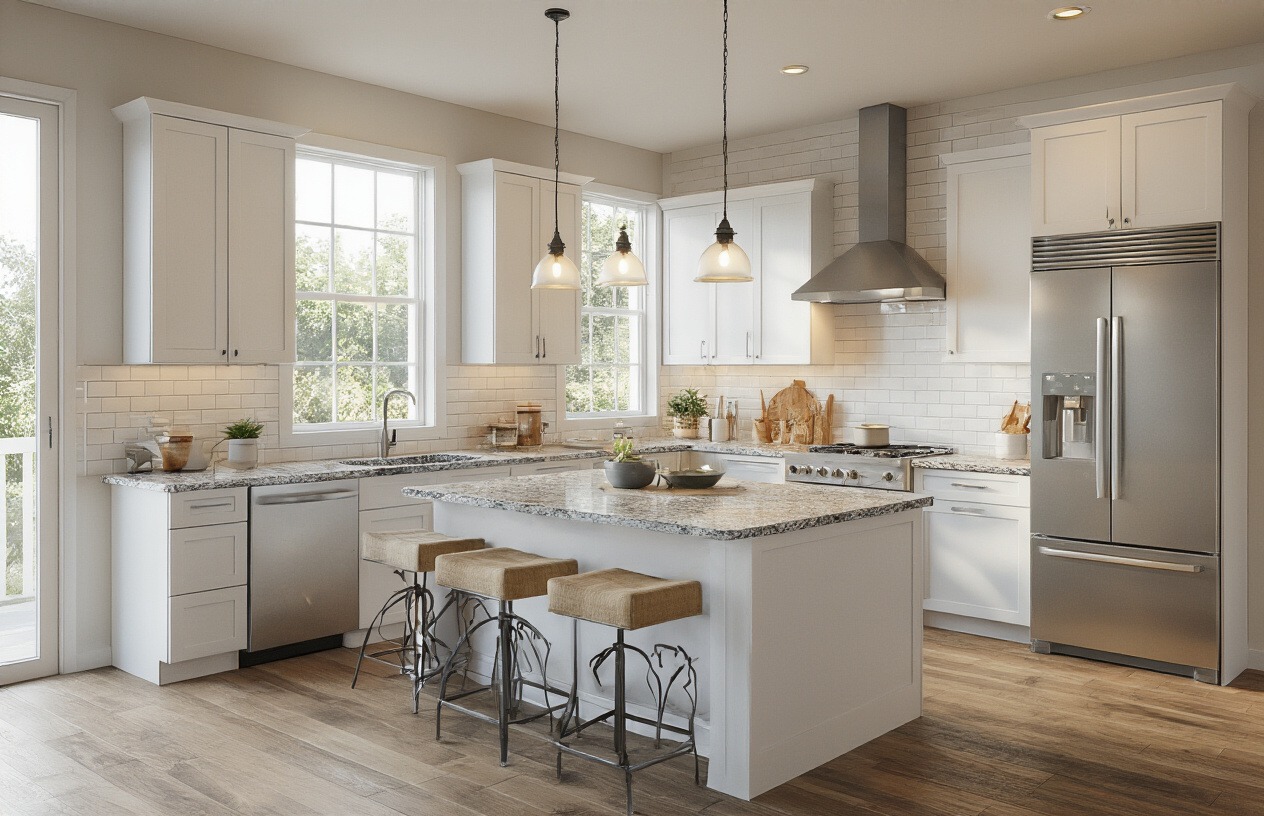
The right combination of colors, smart layout choices, and thoughtful lighting can completely change how your kitchen feels and functions. From choosing cabinet designs that reflect your personality to selecting countertops that balance style with practicality, each element works together to create a space you’ll love spending time in. These design choices don’t just make your kitchen look better—they make cooking, entertaining, and daily life more enjoyable.
Start with one area that excites you most, whether it’s updating your color scheme or improving your lighting setup. Small changes can make a big impact, and you don’t need to renovate everything at once. Your kitchen should work for your lifestyle and make you smile every time you walk in, so trust your instincts and create a space that truly feels like home.
Add a comment